Work and teams
Turn meeting notes into a useful handover
A meeting can produce plenty of notes while leaving the next person unsure what was decided. A useful handover makes the outcome easy to find: what changed, which questions remain open, and what action was actually agreed.
Give the meeting enough context
Use a title that identifies the project or topic and include the meeting date. List attendees so a later reader knows whose discussion the notes describe.
Keep one entry per meeting. A shared project name makes related meetings searchable, while a date or specific topic distinguishes them. Avoid using a title such as “Weekly meeting” for every unrelated conversation.
Separate decisions, questions, and actions
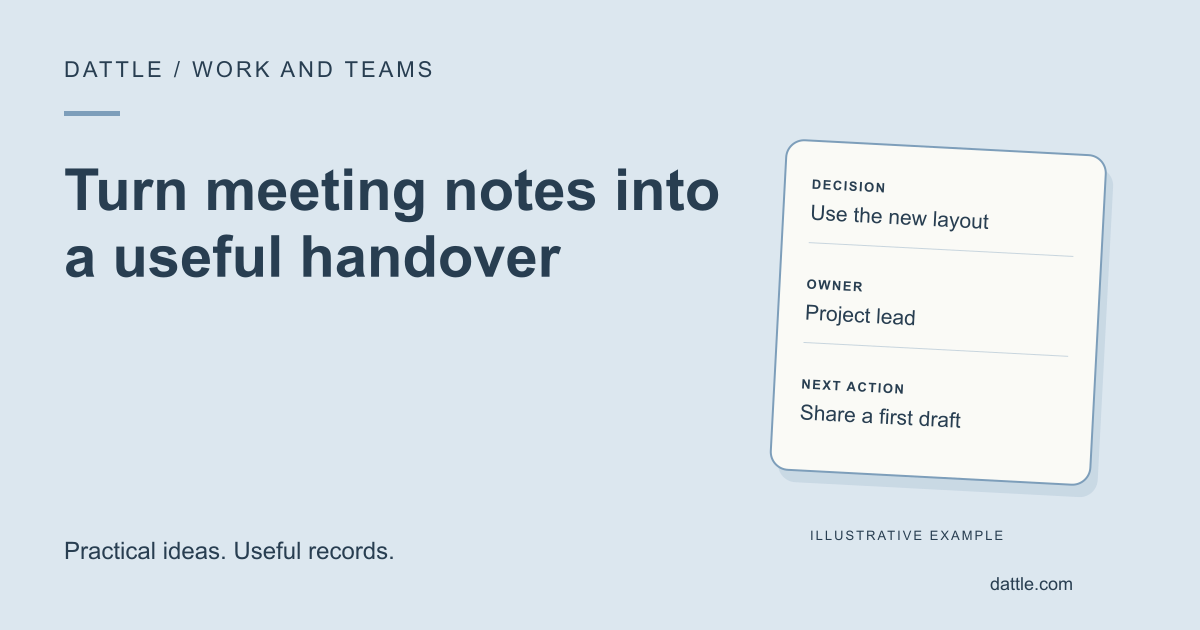
A decision describes what the group agreed. An open question describes something still unresolved. An action describes work someone agreed to do. Labeling these in Notes makes the result easier to scan.
Include a named owner and date when they were actually agreed. If either is missing, say it is unassigned or still to be agreed. Filling a gap with an assumption can create a false commitment.
A short handover can carry the outcome
This fictional example preserves the outcome without reproducing the whole discussion.
| Type | Note |
|---|---|
| Decision | Use bin labels for the next stock count. |
| Action | Demo stock lead will prepare labels by October 14. |
| Open question | Where should overflow stock be recorded? |
| Next review | Confirm overflow location before the count begins. |
Review any generated summary against the source
If you use a recording, obtain participant agreement before recording. Keep your own concise notes of decisions and actions even when a recording is available; they give you an immediate reference for review.
When a tool generates a summary or action list, compare it with the source. Check names, dates, and whether a suggestion was mistaken for a commitment. Correct the result before sharing it as the meeting outcome.
Make the next use of the record clear
Before circulating the notes, ask whether a person who missed the meeting could identify the current decision and next step. Add a little context where shorthand would be confusing.
At the next review, revisit open questions and agreed actions. If you need ongoing task tracking, put those tasks into the team’s chosen work process and keep enough reference in the meeting record to connect the two.
Start with the Meeting Notes template
Meeting Notes includes Title, Attendees, Recording, and Notes. Optional AI can produce Summary and Action Items from a recording; these features may require a subscription or credits. The linked guide shows the starting fields and a fictional entry.
Use a Shared Dattle when the team needs a common record, and agree who reviews the notes before they become the handover. For ongoing field jobs, the Work Order guide provides a separate structure for the job’s identity, outcome, and completion evidence.
KEEP IT SIMPLE
Your starting checklist
- Use a specific title and meeting date.
- Label decisions, questions, and actions.
- Record owners and dates only when agreed.
- Check generated summaries against the source.
- Make the next review or action easy to find.