Personal life
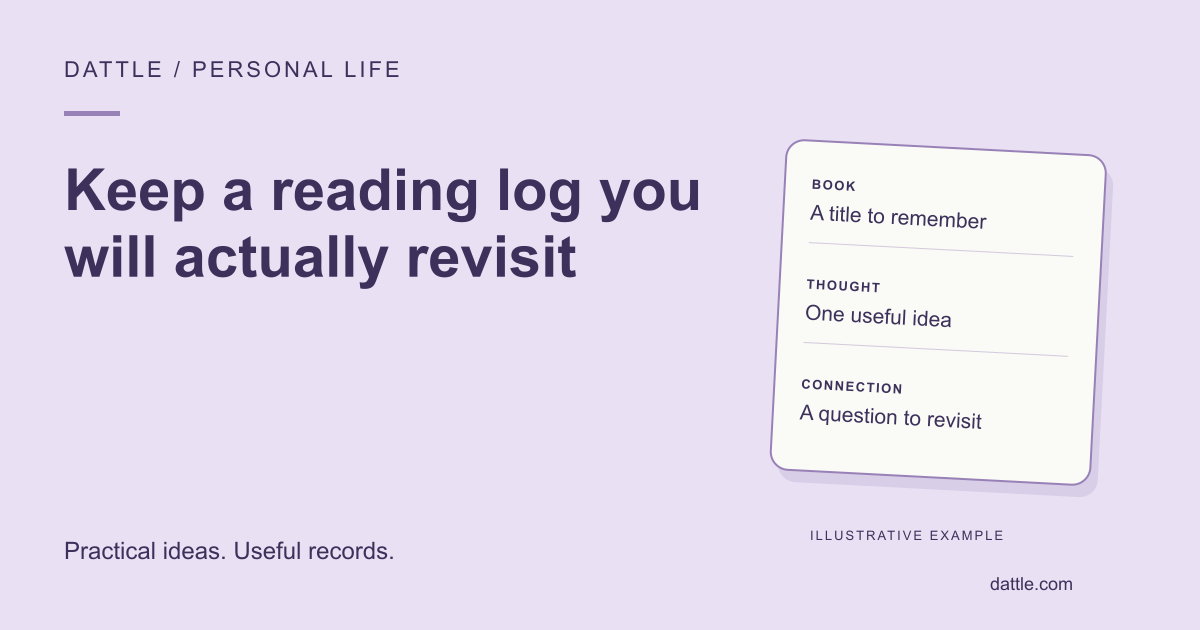
Keep a reading log you will actually revisit
A list of finished books tells you what you read. A useful reading log also reminds you why a book mattered, which idea you wanted to try, or why you put it aside. The entry can be short enough to write while that impression is still clear.
Choose what you want the log to do
You might want to remember recommendations, find an unfinished book, or revisit ideas from something you completed. Choose a purpose before deciding how much to record. An entry should help you make that later decision.
Use one record per book as a starting point. Keep author and title separate when possible, and include an edition or format in your notes if it affects what you want to remember.
Keep the reading status current
“Want to Read,” “Reading,” and “Finished” answer different questions. A “Did Not Finish” entry can be useful too: a short reason helps you decide whether to return to the book later.
Update the same book entry as your status changes. If you want to keep notes from multiple readings, add a date to each note or use a separate reading-session log. That keeps a current status from being confused with a history of sessions.
Write one takeaway your future self can use
This fictional example records what the reader found useful rather than trying to summarize the whole book.
| Detail | Example |
|---|---|
| Title | The Example Garden |
| Author | A. Reader |
| Status | Finished |
| Rating | 4 / 5 |
| Key takeaway | Use the seasonal checklist to choose three tasks for next month. |
Give ratings a consistent meaning
A rating is most useful when it means roughly the same thing across your entries. Decide whether it describes enjoyment, usefulness, or something else. Put the reason in a sentence when the number alone would be hard to interpret.
Leave a rating blank until you have enough experience with the book to give one. Changing a rating after finishing is reasonable; the note can explain what changed your view.
Revisit the log when you need a choice
Before choosing your next book, search the titles you marked as Want to Read. Before recommending a book, revisit your takeaway so you can say who might find it useful and why.
If you record quotations, distinguish copied words from your own thoughts and keep a page or chapter reference. A brief, traceable note is easier to use later than a long passage with no context.
Use the Book Log template
Book Log includes Title, Author, Status, Rating, and Key Takeaway. Optional AI can produce Themes and One-Line Insight from your takeaway; these features may require a subscription or credits. Check generated outputs against what you meant before keeping or sharing them.
Start with the book you are reading now and one you recently finished. That gives you two different statuses to try without turning the setup into a backlog-clearing project.
KEEP IT SIMPLE
Your starting checklist
- Choose a purpose for the log.
- Use one entry per book to start.
- Update the status when it changes.
- Write one specific takeaway.
- Keep a consistent meaning for ratings.